


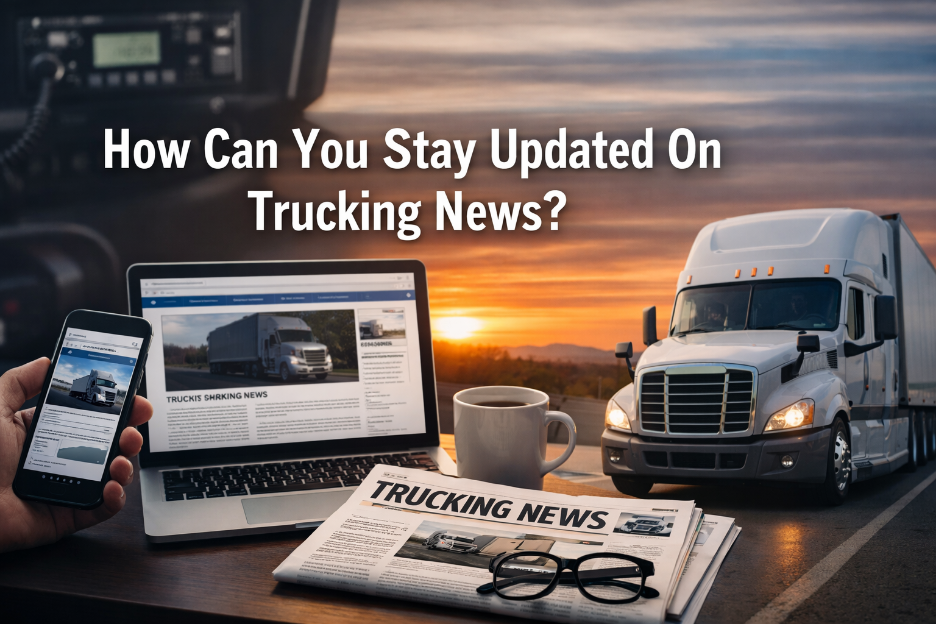
The trucking industry does not slow down. Regulations change, fuel prices vary, the demand for freight goods goes up and down, and new safety requirements emerge with little warning. Meanwhile, you are focused on deliveries, compliance logs, maintenance schedules, and tight timelines. Because of that, being informed is often an additional burden rather than a priority.
Yet neglected regulatory updates or market changes can have a direct impact on your income, safety, and decision-making operations. Therefore, having a structured way to monitor industry developments is not optional – it’s strategic.
In this article, you will learn practical and efficient ways to stay consistent with the latest happenings in the trucking industry.
1. Follow Dedicated Industry News Platforms
One of the best ways to be informed is to rely on specialized trucking news sources instead of general media sources. Broad news websites do not normally focus on freight trends, compliance updates, or driver-based matters. In contrast to that, industry platforms are focused on the developments that directly affect drivers and fleet professionals.
When you follow trucking news that specifically informs about the trucking industry, you get access to structured reporting about regulatory updates, market trends in the freight industry, safety alerts, and equipment innovations. Instead of searching the interrelated headlines, you view the information that’s tailored for your role in the industry. That relevance saves time and enhances clarity.
Consistency matters here. Checking a good industry platform every day, even for ten minutes, creates situational awareness. Over time, this routine helps you to find out the patterns in freight demand, regulatory enforcement, and carrier activity. That awareness enables you to make informed operational decisions as opposed to reactive decisions.
2. Monitor Regulatory Agencies Directly
Industry coverage will frequently summarize a policy change, but the source for that change is regulatory agencies. Therefore, by looking for updates directly from authorities, accuracy and clarity can be ensured.
Two important organizations that have an influence on trucking compliance standards include the Federal Motor Carrier Safety Administration and the United States Department of Transportation. These agencies post updates on Hours of Service rules, safety enforcement programs, inspection programs, and electronic logging device requirements.
By subscribing to official alerts or checking the announcements from them on a regular basis, you take away the chance of relying on second-hand interpretations. Moreover, with direct access, you can have a better idea of implementation timelines, exemptions, and compliance deadlines.
Even if you review the agency’s updates on a weekly basis, that’s a habit to reduce the chances of costly violations or any operational interruption. Reliable compliance starts with accurate information.
3. Subscribe to Curated Newsletters and Mobile Alerts
Time constraints are unavoidable when it comes to trucking. Long hauls and cramped schedules do not leave much time for extended research. For that reason, curated newsletters are an efficient alternative.
Well-organized newsletters report on major trends in the freight markets, regulatory changes, fuel price movements, and major carrier news. Instead of having to search for information manually, you receive information in a condensed format. That is a structure that lowers effort, but not awareness.
Mobile alerts have additional benefits. For times when any major policy decisions or industry shifts take place, push notifications provide instant updates. That immediacy can be valuable if you operate independently or manage fleet logistics. Early awareness helps to make strategic responses more prompt.
However, select a subscription carefully. Give preference to sources known to report facts and to focus on a given industry. Too many alerts can overwhelm attention, so find a subscription base that is limited to alerts that consistently provide actionable insights.
4. Connect with Industry Associations and Trade Groups
Industry associations are usually aware of policy changes before they are mentioned in mainstream headlines. As a result, incorporating reputable trade groups into your news intake adds strategic depth to the news.
Organizations like the American Trucking Associations are regularly publishing legislative analyses, safety research, and policy briefings. Their updates often translate complex regulatory language into tangible implications for drivers and carriers.
This interpretive layer is important. Regulatory documents can be technical and hard to decipher. Trade associations bridge that gap by explaining changes with respect to compliance procedures, operational costs, and industry standards.
Additionally, many associations host webinars and publish reports discussing freight cycles, insurance, and infrastructure developments. Reviewing these materials periodically helps to move beyond the level of headline awareness and move toward a level of strategic understanding.
5. Use Podcasts and Video Briefings Strategically
Reading articles is not the only method for staying informed. Audio and video content can deliver industry insights in a format that fits your schedule more naturally.
Trucking-focused podcasts and video briefings often provide weekly summaries of major developments. These discussions frequently include interviews with safety experts, regulatory specialists, and market analysts. Because these conversations explore context, they offer perspective beyond surface-level reporting.
Listening during scheduled breaks or downtime allows you to absorb information without extending your workday. Moreover, hearing expert analysis can clarify how freight rate trends or compliance updates may influence your decisions.
Nevertheless, evaluate credibility before relying on a source. Choose programs connected to recognized industry professionals or organizations. Accurate information should always take priority over entertainment value.
Final Perspective
The trucking industry is shaped by regulatory oversight, market volatility, technological innovation, and infrastructure constraints. Because these factors shift regularly, informed professionals hold a competitive advantage.
Staying updated does not require constant monitoring. Instead, it requires intentional selection of credible sources and consistent engagement. By combining dedicated industry platforms, regulatory updates, curated summaries, association insights, expert discussions, and peer awareness, you build a comprehensive view of the landscape.
When you treat information as an operational tool rather than passive reading material, you position yourself to adapt quickly, remain compliant, and make decisions grounded in current realities.