


Introduction
The human skeleton is designed to provide balance, strength, and structural support for movement. Among the many bones that contribute to posture and appearance, the clavicles—commonly known as collarbones—play a critical role. They connect the sternum to the shoulders, enabling arm mobility and offering structural stability. However, not all clavicles are shaped or sized the same. Some individuals have narrow clavicles, which can influence physical appearance, posture, athletic performance, and even confidence levels.
Narrow clavicles are not inherently problematic, but their effects vary depending on body composition, genetics, lifestyle, and personal health goals. While some see them as a purely aesthetic characteristic, for others they may relate to posture, muscular development, or skeletal proportion concerns. This comprehensive guide explores the causes, implications, and possible solutions for individuals with narrow clavicles.
Anatomy of the Clavicle
Before examining narrow clavicles in detail, it is essential to understand the anatomy and purpose of this bone.
- Location: The clavicle is a long, slender bone located between the sternum (breastbone) and scapula (shoulder blade).
- Function: It serves as a strut, holding the shoulder joint away from the chest and providing a wide range of motion for the arms.
- Role in posture: The clavicle acts as a stabilizer for the shoulders and chest, maintaining symmetry in the upper body.
- Muscular connections: Several muscles—including the deltoids, trapezius, pectoralis major, and sternocleidomastoid—attach to the clavicle, making it vital for strength and mobility.
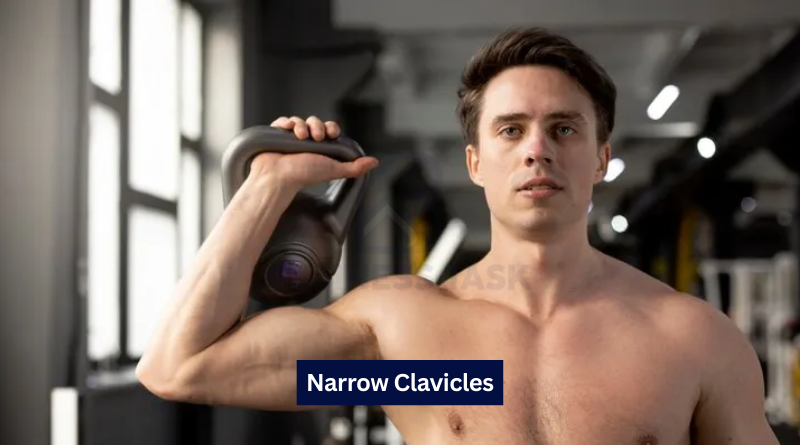
When clavicles are wider, the shoulders appear broader and the upper body frame looks more athletic. Narrow clavicles, by contrast, result in shoulders that appear closer together, often giving the illusion of a smaller upper frame.
What Are Narrow Clavicles?
Narrow clavicles describe a condition in which the collarbones are shorter than average, leading to a more compact shoulder width. While not a medical disorder, this structural difference can affect appearance, biomechanics, and in some cases, self-confidence.
Key characteristics:
- Reduced shoulder width in proportion to torso.
- A “sloped” shoulder appearance in some individuals.
- Limited base for muscle development in the deltoid and upper chest regions.
- Variability across individuals, influenced by genetics and bone structure.
Narrow clavicles are often noticed during adolescence, as the skeletal structure matures. For some people, it remains a neutral trait; for others, it can become a source of concern due to aesthetic or functional reasons.
Causes of Narrow Clavicles
Several factors contribute to why some individuals naturally develop narrow clavicles:
1. Genetics
Bone length and width are largely hereditary. If narrow shoulders run in the family, it is likely that clavicle structure is passed down genetically.
2. Body Composition
Individuals with ectomorphic body types (naturally slim builds) often have narrower clavicles compared to mesomorphic (muscular) or endomorphic (stockier) body types.
3. Developmental Influences
During growth phases, nutrition, physical activity, and posture can subtly influence skeletal development, though genetics remain dominant.
4. Gender Differences
On average, men tend to have longer clavicles than women, contributing to a naturally broader appearance. Women are more likely to exhibit narrow clavicles as part of their natural skeletal frame.
5. Medical Conditions
Rare skeletal conditions, such as cleidocranial dysplasia, can result in underdeveloped or absent clavicles. However, most cases of narrow clavicles are simply a natural variation rather than a disorder.
Effects of Narrow Clavicles
While narrow clavicles are not harmful in themselves, they can influence several aspects of an individual’s life:
1. Aesthetic Appearance
- Shoulders appear narrower, giving the upper body a smaller or less athletic look.
- Clothing fit may be affected, particularly with suits, jackets, or tops designed for broader shoulders.
- Some individuals may feel self-conscious about having less definition in the upper body frame.
2. Muscular Development
- Narrow clavicles provide less surface area for muscle attachment, particularly the deltoids and upper chest.
- Even with consistent training, individuals may find it challenging to achieve the broad-shouldered look commonly associated with athletic physiques.
3. Posture Concerns
- Narrow clavicles sometimes coincide with rounded shoulders or forward-leaning posture.
- Muscular imbalances may develop if shoulder and back muscles are not strengthened.
4. Sports Performance
- In sports like swimming, rowing, or bodybuilding, wider shoulders may provide an advantage.
- However, narrow clavicles do not prevent success; many athletes excel regardless of skeletal structure.
5. Self-Perception
- Narrow clavicles can influence confidence, especially in environments that emphasize physical appearance.
- Understanding how to enhance posture, clothing style, and training can improve self-image.
Can Narrow Clavicles Be Changed?
One of the most common questions is whether clavicle width can be increased. Since clavicle length is determined by bone structure, it cannot be significantly changed after skeletal maturity. However, several strategies can create the illusion of broader shoulders and improve posture:
1. Strength Training
Building muscle around the shoulders, chest, and upper back can visually broaden the frame. Key exercises include:
- Lateral raises for targeting the medial deltoids.
- Overhead presses for overall shoulder mass.
- Pull-ups and rows to strengthen the back and improve posture.
- Incline bench presses for chest and shoulder definition.
2. Posture Improvement
Maintaining upright posture can enhance the appearance of shoulder width. Exercises like face pulls, band pull-aparts, and core strengthening drills support better alignment.
3. Clothing Choices
- Structured jackets, blazers, or shirts with shoulder padding can create the illusion of width.
- Avoiding overly tight tops emphasizes balance rather than narrowness.
4. Nutrition and Muscle Growth
A balanced diet that supports lean muscle development helps maximize the potential of the frame, making narrow clavicles less noticeable.
5. Surgical Options (Rare and Extreme)
In rare cosmetic cases, some individuals may consider surgical clavicle lengthening procedures. However, these are not common, involve significant risk, and are typically unnecessary.
Fitness Strategies for Narrow Clavicles
For those aiming to enhance their appearance or strength despite narrow clavicles, fitness can play a transformative role.
Key Training Principles:
- Prioritize Shoulder Development – Focus on lateral and posterior deltoids to create width.
- Balance Upper and Lower Body – Building strong legs and a wide back ensures overall proportion.
- Progressive Overload – Gradually increase weights to stimulate continuous muscle growth.
- Variety in Angles – Incorporating different angles ensures all muscle fibers are activated.
- Consistency – Long-term dedication produces visible results.
Example Routine for Shoulder Width:
- Lateral Raises – 4 sets of 12 reps
- Overhead Dumbbell Press – 4 sets of 10 reps
- Upright Rows – 3 sets of 12 reps
- Pull-Ups – 4 sets to failure
- Face Pulls – 4 sets of 15 reps
Psychological and Social Aspects
Narrow clavicles often become more of a psychological concern than a physical limitation. In cultures where broad shoulders are seen as a symbol of masculinity or strength, individuals with narrow clavicles may feel disadvantaged.
Ways to Overcome Self-Doubt:
- Shift Focus: Recognize that fitness, confidence, and charisma often outweigh bone structure in social perception.
- Set Realistic Goals: Understand that structural limitations do not define overall health or attractiveness.
- Embrace Uniqueness: Many models, athletes, and professionals succeed without having broad shoulders.
- Mental Health Awareness: Body image concerns should be addressed with positive self-talk, counseling, or supportive communities.
Myths About Narrow Clavicles
- “Narrow clavicles mean weak shoulders.”
False—strength is determined by muscle development, not clavicle width. - “You cannot look athletic with narrow clavicles.”
False—through training and posture correction, anyone can build an athletic appearance. - “Only surgery can fix narrow clavicles.”
False—most people achieve excellent results with fitness, nutrition, and clothing adjustments. - “Narrow clavicles are unhealthy.”
False—this is a natural variation and not a health problem.
Case Studies and Real-Life Examples
- Athletes: Many successful athletes in sports like boxing, gymnastics, and martial arts thrive with compact frames and narrow clavicles, proving that performance is not restricted.
- Models: Fashion modeling often celebrates unique body types, and narrow clavicles can enhance a sleek, elegant silhouette.
- Everyday Individuals: Fitness enthusiasts frequently document their progress online, showcasing transformations where posture, muscle growth, and confidence offset naturally narrow shoulders.
Conclusion
Narrow clavicles are a natural skeletal trait determined largely by genetics. While they may influence appearance and pose challenges in achieving a broader look, they do not restrict strength, health, or success. With proper training, posture improvement, and self-confidence, individuals with narrow clavicles can enhance their physique and embrace their unique structure.
The key is shifting perspective: rather than viewing narrow clavicles as a limitation, they can be seen as a unique feature that contributes to individuality. Fitness, style, and self-acceptance play more significant roles in how one is perceived than bone structure alone.