
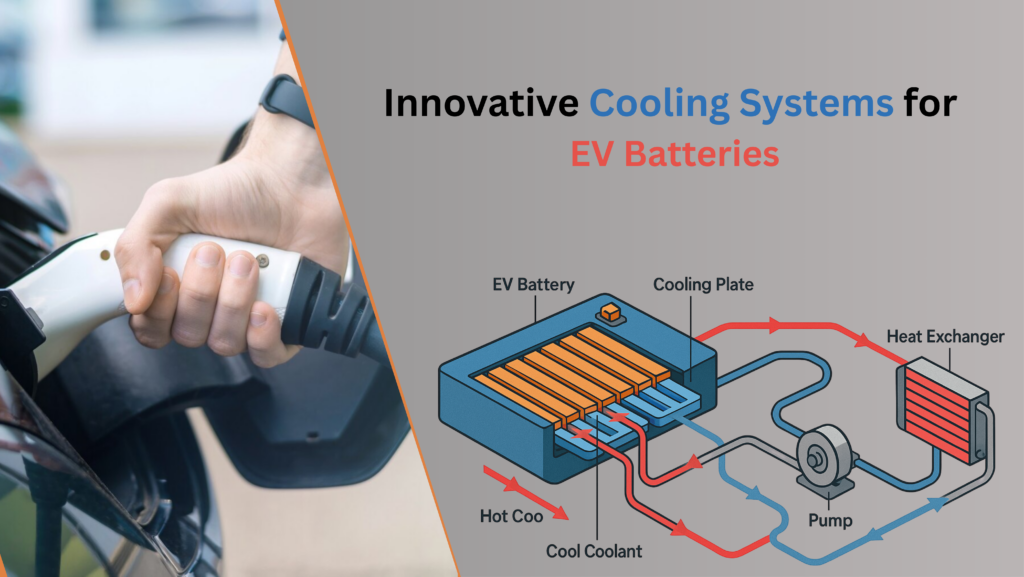
Electric vehicles (EVs) may run without engines, but the real heat comes from within—inside the battery pack. As energy density increases and charging times shrink, the challenge isn’t just generating power—it’s managing the heat it creates.
Enter the EV Battery Cooling Plate—a slim, seemingly simple component that is, in reality, an engineering marvel. According to Stratview Research, the EV Battery Cooling Plates Market is projected to grow at a CAGR of 11.7%, reaching USD 3.2 billion by 2031, fueled by the explosive growth of EVs and rising demand for thermal stability and battery safety.
The Problem: EV Batteries Generate More Heat Than They Can Handle
Modern EVs use lithium-ion battery packs that operate in a narrow temperature window (typically 20°C to 40°C). However, fast charging, high power output, and prolonged usage push batteries beyond this range, creating significant risks:
- Thermal runaway, leading to battery fires or explosions
- Reduced charging speed and range performance
- Accelerated degradation of battery life
- Costly warranty claims and safety recalls for OEMs
And as EVs shift toward 800V architectures and high-capacity cells, the thermal challenge becomes even more intense.
Agitation: Without Efficient Cooling, the EV Boom Could Hit a Speed Bump
A failure in battery thermal management doesn’t just affect the battery—it threatens:
- Driver safety and confidence, especially in hot climates
- Battery efficiency, slashing range and increasing charging times
- OEM profitability, due to increased maintenance and replacement costs
- Regulatory compliance, as global safety norms tighten
In short, even the most advanced EV is only as reliable as its cooling system. And within that system, cooling plates are the linchpin.
Solution: Cooling Plates—The Silent Guardians of Battery Health
EV battery cooling plates sit beneath or between battery modules and actively manage temperature through liquid cooling. They are designed to:
- Distribute coolant evenly across battery cells
- Maintain consistent thermal performance in varying external conditions
- Enable faster charging cycles without overheating
- Extend battery life and efficiency
Stratview Research identifies stamped and brazed aluminum cooling plates as the dominant technology, thanks to their lightweight, high thermal conductivity, and ease of integration.
Types of Cooling Plate Designs
- Serpentine Channels
- Simple, cost-effective
- Common in early EV models
- Branching or Multi-Channel Flow Designs
- Even fluid distribution
- Improved heat removal efficiency
- Double-Sided Plates (Sandwich Type)
- Cool cells from both top and bottom
- Ideal for high-capacity, compact battery packs
- Extruded Cooling Plates
- Higher mechanical strength
- Suitable for heavy-duty or commercial EVs
Each design is tailored to cell format (pouch, cylindrical, or prismatic) and vehicle class (passenger car, truck, bus, etc.).
Where the Demand Is Accelerating
Stratview segments the market by vehicle type and highlights fast-growing applications:
- Passenger EVs: Dominant market share, with growing demand for thinner, lighter plates
- Commercial Vehicles: Buses and trucks adopting high-capacity battery systems needing robust cooling
- Two/Three-Wheelers: Especially in Asia, growing adoption of small-form-factor plates
- High-Performance EVs: Sports cars and premium brands requiring ultra-efficient thermal designs
Regional Landscape
- Asia-Pacific leads the global market, with China being the epicenter of both EV production and battery component supply chains
- Europe is rapidly growing, driven by EV mandates, local battery manufacturing, and stringent safety norms
- North America is witnessing strong OEM investment, especially in thermal innovation and solid-state battery readiness
Stratview forecasts Asia-Pacific to retain over 50% market share through 2030.
Key Players in the EV Battery Cooling Plates Market
Stratview Research identifies several leading players shaping this evolving industry:
Cooling Plate Manufacturers
- Valeo
- Mahle GmbH
- Dana Incorporated
- Sogefi S.p.A.
- Borg Warner Inc.
- BYD
- Marelli
Emerging & Specialized Players
- Aludyne – Specializing in aluminum-based cooling technologies
- Röchling Automotive – Known for precision-molded plastic-metal hybrid cooling structures
- Boyd Corporation – Designs custom-engineered liquid cold plates for EV platforms
These players are investing in lightweight design, manufacturing scalability, and integration with battery packs to win contracts with OEMs and Tier-1 suppliers.
Strategic Takeaways
- The transition to high-voltage EVs and fast charging makes cooling plates non-negotiable
- Integration with battery pack design, sensors, and BMS systems is becoming a differentiator
- Stamped aluminum remains the standard, but innovation is shifting toward multi-material, hybrid designs
- Suppliers must adapt to changing cell formats and architecture trends in real time
- Sustainability will drive demand for recyclable and energy-efficient cooling plate production
Conclusion: Cool Tech Powering a Hot Market
EV battery cooling plates may not make headlines, but they ensure EVs stay on the road—and out of the recall lists. As electric mobility accelerates, these quiet components will play a loud role in shaping performance, safety, and longevity.
Stratview’s EV Battery Cooling Plates Market Report offers an in-depth view of product designs, materials, regional dynamics, competitive strategies, and demand forecasts—equipping OEMs and suppliers with the insights needed to stay ahead in the EV thermal race.