
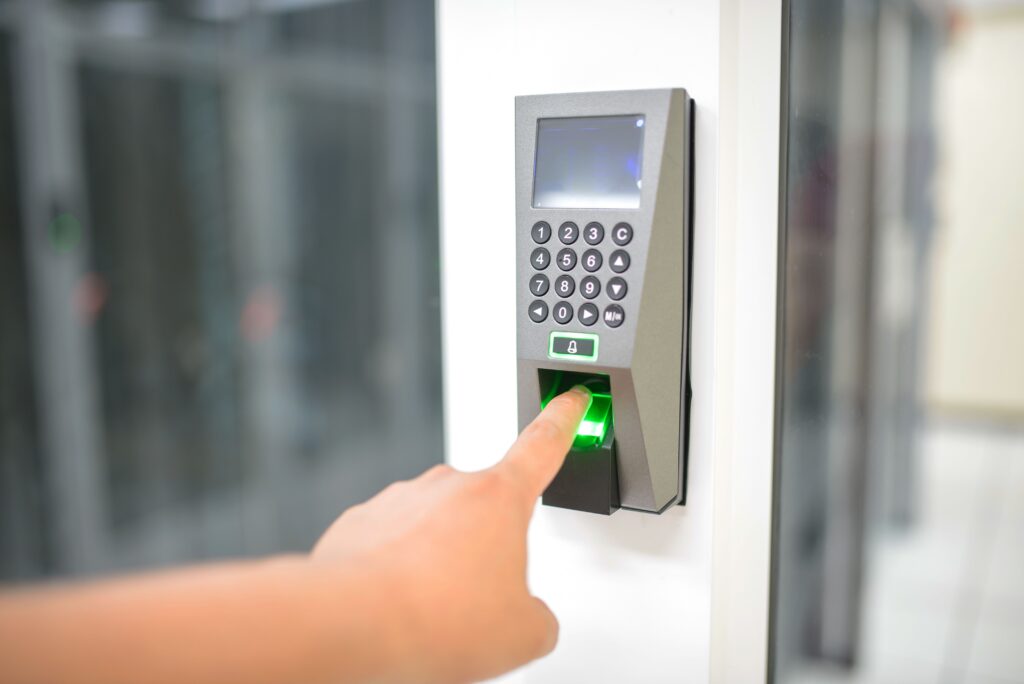
Modern organisations face growing pressure to protect their premises, data, and people. Traditional keys and PIN codes are increasingly seen as vulnerable, which is why many businesses are turning to more advanced identity verification methods to strengthen their security infrastructure.
The Rise of Biometrics in the Workplace
Over the past decade, biometric technology has moved from niche applications into everyday business environments. Where fingerprint scanners and facial recognition once belonged to high-security facilities only, they are now found in offices, warehouses, hospitals, and educational institutions across the UK and beyond.
The core appeal is straightforward: biometric identifiers are unique to each individual and cannot be forgotten, lent, or stolen in the way a badge or password can. This makes them significantly more reliable as a means of granting or restricting access. Biometric security combines this inherent reliability with digital access management, creating systems that are both practical and difficult to compromise.
Adoption has also been driven by improvements in hardware and software. Scanners are faster, more accurate, and better at handling variables such as lighting conditions or minor physical changes. Organisations no longer need to choose between convenience and security, as modern biometric systems offer both.
Integrating Biometrics Into a Broader Security Strategy
Biometric technology works best when it forms part of a layered security approach. A single method of access control, however advanced, has limitations. Combining biometrics with smart card readers, real-time monitoring, and centralised management creates a more resilient and responsive system overall.
This is where platform-level thinking becomes important. Managing access rights across multiple buildings, departments, or countries requires software that can handle complexity without creating administrative bottlenecks. Nedap Security Management provides organisations with an open platform that connects different hardware components and access control methods, making it easier to manage permissions at scale.
For businesses operating across several sites, centralised control is particularly valuable. Security teams can update access rights instantly, respond to incidents in real time, and generate detailed audit trails without needing to be physically present at every location.
Practical Considerations for Businesses
Before implementing biometric access control, organisations should consider a few key factors:
- Data privacy regulations, including GDPR, which classify biometric data as sensitive personal information
- The scalability of the chosen system as the organisation grows
- Integration compatibility with existing security hardware and IT infrastructure
- User acceptance and the communication needed to support a smooth rollout
Addressing these considerations early makes implementation more efficient and helps build staff confidence in the new systems. With the right preparation and the right technology partner, biometric access control can deliver a meaningful and lasting improvement to how an organisation manages physical security.