

Crafting has always been a meaningful way of making something personal and visually appealing out of simple materials. Although a lot of the supplies are used to provide simple decorating functions, some offer far greater creative flexibility. Crepe paper is one such material that always stands out.
Although it might appear delicate and simple, its unique texture, flexibility, and colour variety provide incredibly artistic possibilities. It can be easily stretched, folded, and shaped to enable you to go beyond flat designs and experiment with three dimensions and structure.
Moreover, its capacity to retain shape allows it to be used in small handmade elements as well as in large decorative elements. With the evolving creativity, material facilitating experimentation becomes increasingly valuable. That is why it is critical to understand its distinctive qualities.
The following sections explain the ways in which this basic material changes the regular crafts into true artistic expressions.
1. Stretch and Texture Bring Sculptural Detail to Simple Projects

Natural stretch and its crinkled fineness are two of the most outstanding attributes of crepe paper. In contrast to smooth paper, it can expand easily when stretched, which enables it to accommodate curves and soft shapes. Due to such flexibility, even simple cut-outs can be shaped into more realistic and dynamic shapes.
Moreover, the textured surface produces small shadows as the light is cast on it. This contrast of light and shadow gives a sculptural effect that instantly increases the visual appeal. Consequently, projects do not appear flat or unfinished.
Moreover, the flexibility and shaping capability of the material make it perfect for making petals, leaves, and ornamental accents. As a result, basic craft concepts acquire aesthetic elaboration and a more refined appearance.
2. Layering and Shaping Techniques Create Realism in Handmade Designs
Although texture adds dimension, layering techniques contribute to increased realism. By putting several pieces on top of each other slowly, you can achieve structure and fullness with greater control. It is particularly well-suited to decorative arrangements and floral designs that require volume and balance.
In addition, shaping techniques, like twisting, folding, and ruffling, make each layer unique and visually expressive. Rather than appearing stiff, the material responds naturally to gentle handling. Thus, designs resemble organic structures instead of paper construction.
Simultaneously, layering in combination with shaping creates depth and movement in a project, enhancing its artistic appeal. Thus, an ordinary, simple craft is transformed into a realistic and captivating artwork with impressive visual impact.
3. Vibrant Colors and Finishes Add Depth and Visual Impact to Handmade Creations
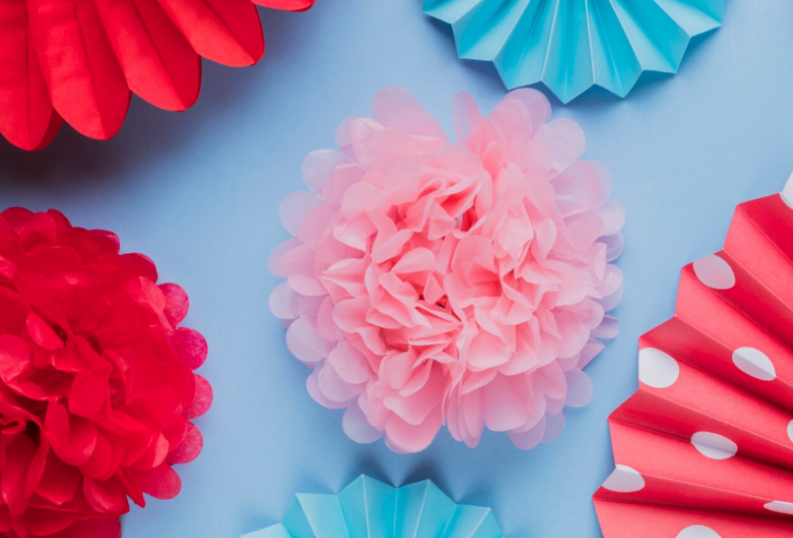
Color is the key element in the transformation of crafts into art. Fortunately, this material can be found in a wide variety of vivid and natural colors. Because of this diversity, the creators can experiment with contrast, harmony, and theme.
Furthermore, the application of various tones helps in adding depth to the projects. The darker colors are used under the lighter ones to give a natural shadow effect. Meanwhile, vibrant colors highlight areas of focus and add energy to the whole composition.
Moreover, the slightly crinkled finish adds to the visual richness of every color. Light is not reflected evenly on the surface, which provides a textured and vibrant appearance. Consequently, even basic handmade items look bright, shiny, and professionally designed.
4. Flexible Structures Turn Simple Decorations into Statement Pieces
Besides small-scale crafts, crepe paper also supports large-scale decorative ideas. This is very light and flexible, and hence can be folded, gathered, and draped easily. Therefore, it is appropriate for creating meaningful visual displays.
For example, individual elements may be grouped into wall backgrounds or decorative wall objects. When well constituted, these works create bold compositions that define a space and draw immediate visual attention. Thus, it brings amazing outcomes with minimal cost and effort.
Moreover, its flexibility allows it to be adapted to different events and themes. Whether it is used as seasonal decor or party decor, it can turn ordinary decorations into eye-catching items that elevate the overall setting beautifully.
5. Versatility Expands Creative Possibilities Beyond Basic Crafting

Versatility plays a significant role in elevating simple crafts into artistic work. This paper can be shaped into delicate flowers, bold event decorations, thoughtful gift accents, and interesting classroom displays. Due to the ease in adapting to various themes and purposes, it can be useful for both small personal projects and large decorations.
Moreover, it matches well with other art supplies like cardstock, ribbons, adhesive items, and light frames. This flexibility promotes layered compositions and mixed media designs that give the creators the confidence to experiment with structure and texture.
Moreover, it is simple to cut, shape, and assemble, making it simple enough to be used by beginners but creative enough to be enjoyed by advanced crafters. Consequently, creative ideas may evolve into more refined and aesthetically appealing works of art.
Conclusion
Artistic transformation does not always depend on complex tools or costly materials. Instead, it relies on how effectively a material responds to creativity and imagination. When handled thoughtfully, even a simple supply can produce refined, eye-catching results that appear carefully designed rather than casually assembled. The true value lies in its ability to adapt to different ideas and techniques.
By encouraging experimentation with shape, scale, and color, this versatile medium supports more expressive craftsmanship. As confidence strengthens and skills improve, basic handmade projects gradually develop into decorative pieces that look intentional, polished, and visually impressive in any setting.