
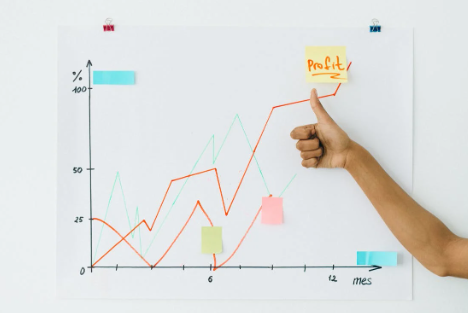
Understanding market patterns is vital for any trader who aims to make informed decisions and minimize risk situations. Sadly, many believe that comprehending the market simply involves guessing where the price may go next. But market patterns represent persistent behavior in the marketplace and understanding them opens doors to significant advantages. Familiarizing yourself with market psychology provides a necessary foundation for grasping trader behavior and the way it influences price changes. This article will take you through the essence of market patterns, the tools used for their analysis, and industry insights, enabling you to think and act like a professional trader in the contemporary marketplace.
What Are Market Patterns?
Market patterns are periodic price movements in a chart reflecting the habits and emotions of the traders. They are usually categorized into three kinds: trends that signify movement in one direction, reversals that hint prices are about to shift, and consolidation patterns that indicate periods of indecision. Learning to notice these patterns at an early stage allows you to seize favorable chances and avert dangers. You will come across patterns like head and shoulders, triangles, and flags in your trading journey. The ability of the market to reflect human psychology makes understanding patterns easier, as it takes patterns as the most realistic anticipation of future movements.
Tools and Techniques for Analyzing Patterns
To know how to analyze patterns well, one has to use the right tools. Charts are the first step in marking patterns together, and they allow you to visualize what is happening to the market. Indicators like moving averages and MACD smooth the market noise and reveal the actual trend. You can use special software that depends on historical stats to see the current situation of the market quickly. The tips to make things even clearer are to utilize logical colors and lines. In case you are just starting out, you should consider using software, as it will make the whole process easier to get going.
Real-Life Application of Market Patterns
There are many traders who have benefited a lot by directly using market patterns in their trades. For example, a trader who recognized a head-and-shoulders pattern was aware that the stock was on the verge of dropping, and he shorted it beforehand. Patterns also assist in risk management by providing a stop-loss placement strategy. To practice what you have learnt, simply use the patterns as a guiding plan, not as a certainty. Daily pattern tracking can be achieved by ensuring to check charts on a daily basis and be aware of any market news that can change trends. These habits will assist you in being a successful trader, as they will make your trades more systematic and mindful.
Instant Prop Firm: A New Approach to Professional Trading
Proprietary or prop firm trading presents a unique opportunity to trade professionally without huge initial capital. Instant prop firms particularly allow you to start trading quickly by offering small funded accounts based on your passing initial evaluations. While utilizing market patterns, beginner traders enjoy the discipline and back-up of a structured environment, which improves their trading skills more quickly. Knowing how to use these patterns in your prop trading will increase the stability of your decisions when you trade with a firm. Moreover, to make the most of this opportunity, it is indispensable to go through the provided educational material and practice fast-paced decision-making to become a better trader.
Common Mistakes to Avoid When Analyzing Patterns
Mistakes are the biggest traps when you are analyzing market patterns. A very frequent one is ignoring the entire picture and considering that the sole pattern you see is a standalone idea. To avoid that, one has to consider the context of the market, as well as financial reports and news. Another serious error is the tendency to be cocky that a pattern is accurate when the volatility is high, which is one of the reasons why the major players’ emotional decisions cause rapid market changes. Patterns provide the foundation your trade must rest on but never let them change your risk management approach and make decisions without checking out multiple sources of information. Also, make it a habit to learn from what went wrong and correct your trading.
Conclusion
Grasping market patterns is a crucial skill that equips you with the necessary tools to be a smart and active trader. It offers an upper hand by making you take decisions that are more rational and prevent mistakes that are really expensive. Patience, sustained effort, and consideration of all factors affecting a pattern will help turn the pattern knowledge into practical work. As a trade develops, continual practice in observing and analyzing patterns can be able to increase the subsequent legitimation of the trading performance. When you devotionally engage in learning a variety of business resources and the pattern deeper in the same field, you will own the seal of a professional trader.