

All last year I was unsure: is it too late to get into crypto? In the fall, when Bitcoin was trading above $120,000, it felt like the train had already left. How could I have missed that opportunity? I should have bought some coins as soon as I became interested. Naturally, I was afraid to enter the market at its peak. Then prices crashed. My first thought was: “Good thing I didn’t get involved after all.”
After cooling off a bit, I decided to seriously dive into the topic. I bought a course, got into a circle of active people, and tested several ways to make money. I quickly came to the conclusion: trading manually 24/7 is not for me. Lack of experience, nerves, and not enough time – the risks are too high.
I started looking for ways to automate. There were three options: copy trading (copying other people’s trades), using AI, and algorithmic trading (bots). I chose Botty – a platform that doesn’t promise huge gains but offers a strict mathematical model. I’ve been using it for several months now and have prepared a detailed review of launching my first algorithm and what came of it.

The dilemma of choice: copy trading, AI, or algorithms? Why I chose Botty
Each option has its own pitfalls that only become clear upon closer examination. Before settling on Botty, I tested the alternatives.
- At first glance, copy trading seems the simplest: you monitor reviews, subscribe to a successful trader, and their trades are duplicated in your account. But when thousands of people follow the same “guru”… Orders can’t all be executed at the same price simultaneously – which leads to a cascade of price drops or spikes. The strategy creator takes profit, while their followers enter at worse prices or end up with losses.
- Artificial intelligence in trading – in my opinion, it’s hype. Judging by reviews, AI often makes mistakes. Entrusting capital to a technology that works like a “black box”? No, thanks.
- Algorithmic trading stands out for its transparency. The key difference with bots is that they simply execute predefined rules: they buy during dips and sell during rebounds. For me, this became the deciding factor – it’s better to have a clear mathematical model than to rely on luck and someone else’s intuition.
Botty doesn’t offer “signals for everyone”; it’s more like a personal assistant. Everyone launches their bot at different times. Settings are individual, trading pairs vary. You don’t have to worry about the typical issues that arise in other approaches.

Getting to know Botty: not a “money button,” but software
First, I read reviews about Botty – everything I could find. It immediately became clear: there’s no easy money here, and that’s a good sign. People from different professions and with varying levels of experience in cryptocurrency noted that the platform significantly simplified their lives. Entrepreneurs and programmers wrote about substantial time savings, while beginners and even retirees mentioned the ability to figure everything out without outside help. Many reviews emphasized that the result directly depends on the choice of strategy and personal control of parameters. Overall, the feedback confirms: this is functional software for conscious investing, not another “get-rich” button.
There were no profit promises in the ads or on the Botty website either – instead, there was an offer to go through training to understand the basics. I watched the video tutorials and read all the instructions. In short, I got a solid understanding of how the code that manages the budget works.
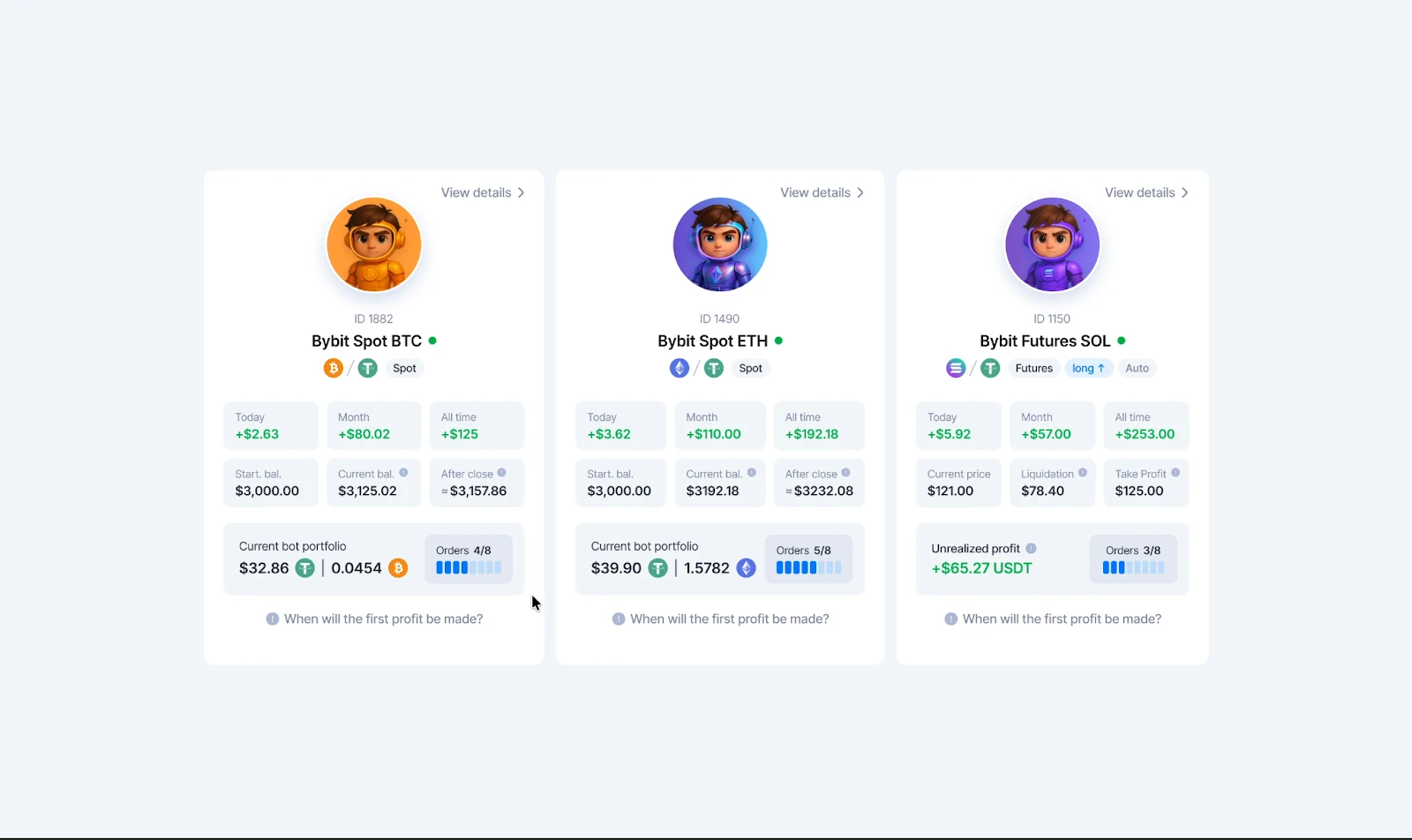
The interface turned out to be intuitive – I was able to navigate the menu and enable the necessary notifications without any help. I receive trade notifications in the mobile app and by email, so I can monitor the process in real time.
In short, Botty doesn’t fully replace a trader – it takes over the routine. The final decision is always mine: how much capital to allocate, what level of risk to choose, and when to stop the process. This is not one of those hyped scam projects.
For myself, I concluded: a bot is a tool, and its effectiveness entirely depends on how competently you use it. I recommend carefully studying the knowledge base first, and only then pressing the buttons.
In practice: how I connected the “autopilot”
Integration with the exchange took about ten minutes. An important point: I didn’t have to share my account passwords with Botty or transfer money to third-party accounts. An API key is used for connection – it only grants access to trading operations.
What did I do?
- I generated an API key and added it to the Botty interface. The algorithm detected the balance and was able to place orders.
- For the system to work correctly, I deposited $1,000 into my exchange account. As the software creators recommend, I launched the bot with $500 and left the other half in reserve. This reserve is critically important – it allows you to move the liquidation point lower and buy more of the asset if the price moves against the position.
- Botty offers templates for different market phases: bullish, bearish, and all-season. Since I don’t consider myself an expert in predicting cycles, I ignored the aggressive settings and chose the all-season spot template.
I liked the spot logic the most – in Botty’s presentation, it was explained using the example of real grain. Even if the price temporarily drops, the grain remains in the farmer’s possession. It can be stored and sold later – it’s a real asset. It’s the same with money: you can withdraw it, move it into staking, or simply wait for the market to recover.
I’m still cautious about futures with leverage. The profit potential is higher there, but so is the risk of liquidation. I’m gathering and analyzing reviews, but haven’t decided yet. In spot algorithms, liquidation doesn’t exist in principle. Even if the market goes down for a long time, Botty will hold the position. Thanks to averaging, there’s no need to wait for the price to return to its absolute peak – a series of trades will close in profit on the first significant rebound.
Backtesting is a time machine for a trader. I tested my Botty settings on past years’ data before risking a real dollar
Before trusting the system with my money, I decided to look at a backtest. After all, it’s more informative than reviews. The built-in tool allows you to “run” selected settings through historical market data from past years. Essentially, it’s testing a hypothesis on solid data: you can see how the bot would have behaved under real conditions in the past.
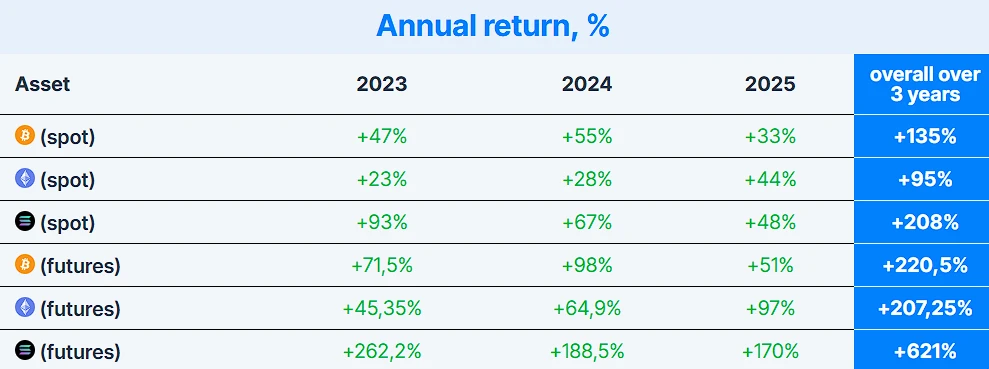
For the test, I chose fundamental assets – Bitcoin, Ethereum, and Solana. The figures from Botty’s archived data for the 2023-2025 period look impressive:
- Bitcoin (BTC) showed potential returns of about 102%;
- Ethereum (ETH) delivered 147.3% using the same algorithms;
- Solana (SOL) became the leader with a result of 341%.
It’s important to understand: this is the return on the amount that was actively in use. I studied Botty’s reports and saw exactly how the grid of orders handled drawdowns. The backtesting function clearly shows that returns depend not on luck, but on mathematically calibrated spacing and order sizes.
Agree, this kind of analysis removes a beginner’s main fear – uncertainty. Instead of guessing, I saw concrete results over one-, two-, and three-year periods. Of course, past performance does not guarantee future profits, but having this kind of data at hand allows you to enter the market not blindly, but with an understanding of the likely outcome.

A trial by fire and the first results with Botty
The first weeks after launching Botty became a real test of patience. It’s one thing to analyze charts in theory, and quite another to see red numbers in your account. I launched the bot during a local correction, when prices began to gradually decline.
I saw in practice how the averaging math works. Honestly, before starting all this, I mentally said goodbye to my $1,000. So I didn’t rush to close trades at a loss – I just observed. Botty methodically executed its built-in logic: it kept buying more of the asset at set intervals as the price dropped, using that same reserve capital. Each new order lowered the average entry price.
When the market finally found a bottom and the price dynamics shifted, the entire accumulated position closed with a single order in profit. I didn’t have to wait for the price to return to the original starting point – thanks to the order grid, Botty locked in profit much earlier.
After several months of this kind of trading, I got my first results. My deposit grew nicely, and I decided to reinvest the earnings. Yes, I didn’t hit “10x” overnight, but I saw steady balance growth. Now the amount in use is larger, and I’ve added several more trading pairs to my portfolio.
This “trial by fire” confirmed: while some people rush around trying to guess reversals, algorithms calmly do their job.
Botty’s strategy – peace of mind
I liked that Botty has no subscription fees. The platform charges a commission only on profitable trades. If the bot is “in a position” or the market is stagnant – I don’t pay anything. That immediately removes the question of trust. It’s in the creators’ interest for my settings to be effective. The commission size depends on the deposit amount: at the start, it’s 20% of the profit, but for larger capital, the percentage decreases. For me, this was an indicator that the project is focused on long-term work with conscious investors, rather than quickly collecting money from beginners.
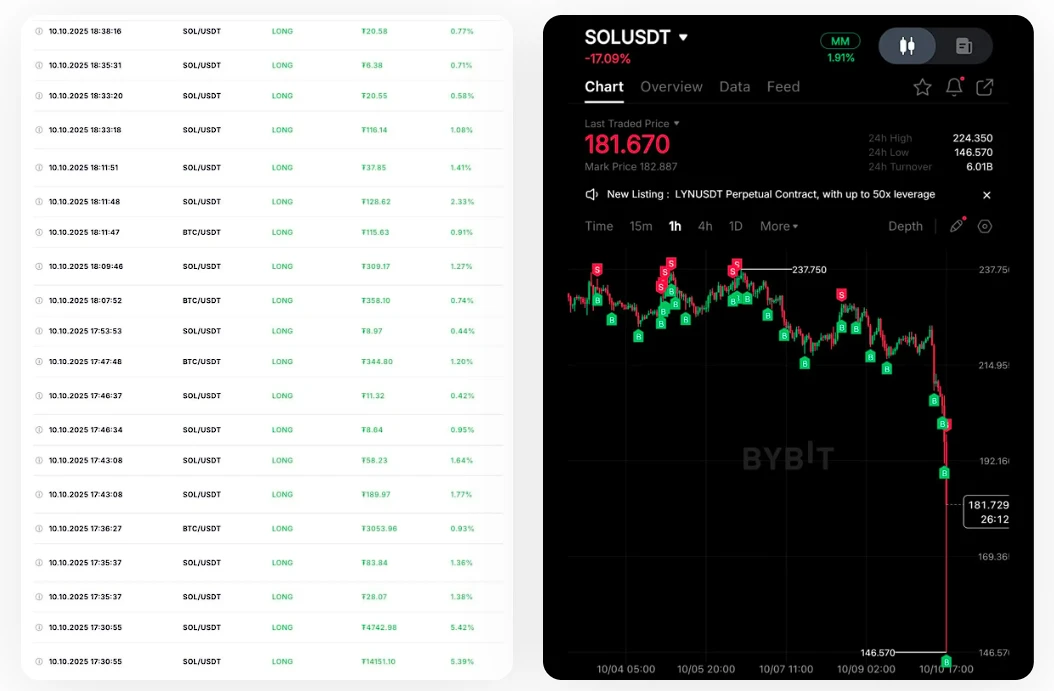
Another factor that brings peace of mind is clearly defined limits. On futures templates, Botty technically does not allow using more than 50% of the budget and limits maximum leverage. This is a kind of “foolproof” protection that prevents excitement from overriding common sense. Even if the market is turbulent, as it was in October 2025, the mathematically calculated margin of safety allows the bot to wait out the storm and close in profit on a rebound.
Conclusion: is it worth it? My take on Botty
As reviews mentioned, Botty freed up my time and helped reduce anxiety. It seems to me the service will really make life easier for:
- Beginners with capital who want to enter crypto but are afraid of doing it at the wrong time.
- Experienced traders who are tired of monitoring charts 24/7 and want to automate their routine.
- Investors looking to diversify. Crypto generates higher returns than bank deposits or stocks.
Botty doesn’t turn trading into a casino. It’s a technological solution for those who understand that long-term stability matters more than random success. I plan to continue increasing my deposit in the system – algorithmic trading is truly convenient.