
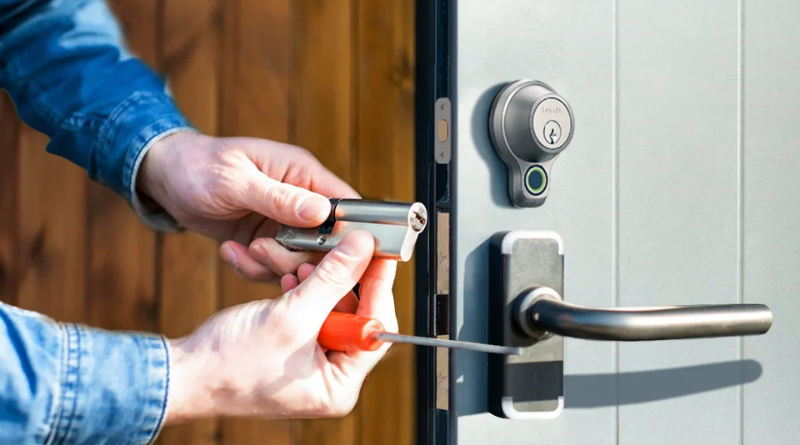
While renovation checklists cover a myriad of important details, from the grout used on your subway tiles to the ideal sheen for your trim, the security of the finished product rarely makes the list. But when you consider the number of people that have keys to your home during the construction process, it really should. The plumber has a key. So does the electrician. And the tile guy. And the drywaller. You get the point.
The Builder Key Problem Nobody Talks About
If a renovation included a builder, developer, or a tract of homes being thrown up on the same estate at the same time, odds are that the locks on your front door were construction key’d. This simply means that the locks are pinned to a predetermined key. The construction key gets used by the site supervisor, subcontractors, and city inspectors to enter any house, given that they are in and out all day. This, of course, makes ideal sense during the construction of the home. It causes panic for you for the rest of your life. For the rest of your homeowner days, that one key or one matching its cuts can open your front door.
Your Renovation Was A Key-Control Vacuum
If your home was in a development, the number of people who had access to your house could be in the dozens. Tradies, subbies, a real estate agent, an assistant, multiple copies for different agents, a cleaner… more? Hand an access code or key to 20 people across a campaign, lose track of one and there’s your security problem.
How many builds or campaigns does a master key stay in service for? How many cleaner turnovers could a spare key have been floating around for the last homeowner and nobody be any the wiser? You don’t have to lose sleep worrying about trusting all and sundry to have a front door key or code at your place. A rekey will fix it.
Time The Audit For The End, Not The Start
The best time to do a lock and key audit is after the last trade has walked off the job and before the movers bring the furniture and the family back in. This should be when the locks are the last thing physically touched on site, ensuring that nothing new has been handed out that needs access. Do it too early and you’ll be rekeying again before the project wraps. Do it too late and you’ve already lived with an unknown number of keys in circulation.
This is an important step in your finishing schedule, just like hiring a final clean. Make re-keying a conscious decision, not a forgotten add-on.
Check Every Entry Point, Not Just The Front Door
Many people only consider the front door when assessing their home security. While the front door is important – in the US, an estimated 34% of burglaries occur through the front door, making it the most attacked entry point (Bureau of Justice Statistics) – you must look at the back door, the garage person-door, the shed, side gates, and any keyed windows when performing an audit.
Here is a good checklist for every property:
- Front and back entry doors
- Garage person-door and roller door controls
- Side gates and fence access
- Shed and outbuilding locks
- Any window with a key-locked latch
Burglars will target the access that is not being watched or checked, often the side gate or garage door, rather than the one assumed to be a weak spot.
Hardware Is Worthless If The Door Doesn’t Sit Right
A new, security-graded deadbolt counts for little if the door it’s affixed to won’t close without a push. Renovation work shifts frames. Timber jambs warp with humidity changes during construction, walls are reframed, and doors that were hung and adjusted mid-build can settle differently once the dust has cleared. The end result is a lock that technically works but doesn’t fully engage because the strike plate and the bolt aren’t lining up the way they should.
This is something that’s worth checking physically, not just visually. Close each outside door and gently test the deadbolt. If it requires a shoulder into the door to lock or unlock, the alignment is off and the lock isn’t giving you the protection its rating suggests. In Australia, external deadbolts are often tested to AS 4145.2 for security performance, but that rating assumes correct installation and alignment. A badly misaligned strike plate will defeat a high-grade lock just as easily as a cheap one.
Rekey, Re-Pin, Or Replace: Know Which One You Actually Need
The rekey, re-pin, or replace decision is a financial one that you make based on how much physical life is left in the hardware you have, weighed against the value of that hardware in place. A new lock set bought at retail is going to cost $75 and up; most lock sets that aren’t bottom-of-the-barrel can be brought back into like-new condition with a 15-minute tumbler job and a little lubrication. Up here, locksmiths get $15-20 per lock for on-site rekeying and re-pinning. It doesn’t take long to do the math on that.
If You Own More Than One Property, This Is The Moment To Set Up A Master Key System
Renovators with rentals, holiday lets, or a small portfolio of investment properties have a different, but no less frustrating problem – carrying a separate, unlabelled key for every property, and every unit within it. This soon becomes unwieldy, and practically guarantees that keys will be mixed up, incorrectly labelled, or even handed to the wrong tradesperson.
This is a problem that a properly designed master key setup effortlessly solves – one key that opens every lock across your property, with an individual key that opens only its own door. Tenants and trades get precisely the right level of access, you still waltz in anywhere, and you’re not permanently crippled with a dozen unmarked keys on your person. Setting up master key systems when you’re already opening up every lock in the building is no big deal – in fact, it’s easier than trying to retrofit one if you ever feel the need for it later on. If you’re rekeying the property already, ask the locksmith about how you can set one up.
Upgrade To Restricted Keyways While You’ve Already Got A Locksmith There
You can get standard key blanks at any hardware store. This means someone with a spare key – a former tenant, that old cleaner, a tradesperson from three years ago – can take the key you left under the mat and get a copy of your house key without you ever knowing about it.
Restricted keyways have a patented blank that only a licensed locksmith can duplicate, and only with proof you’re authorised to order a copy. This one change puts key control back in your hands, permanently. It’s a small additional cost when you’re already paying for a callout and rekey, and it removes the uncontrolled duplication risk for good. Locksmiths are licensed, so confirm you’re dealing with a licensed operator before handing over your cylinders or discussing a restricted system – it’s not a formality, it’s what makes the restricted keyway enforceable in the first place.
Smart Locks Are A Layer, Not A Replacement
Electronic access and app-based entry are all well and good while you’re renovating – temporary PIN codes for trades mean you’re not giving out physical keys at all, and you can simply hit delete on that contractor the minute they overbill you. But a smart lock that’s out of battery or left without decent connectivity is just dead hardware costing you time and cash you’ve bolted to your door.
So, smart lock installation should be dealt with in partnership with a mechanical deadbolt, not in place of one. Think of the electronics as the cool thing and the deadbolt as that thing you know you can rely on – it’ll be there when the app won’t connect, the wifi drops, or the battery dies because a freak storm knocked out the power just when you need to get inside.
Put The Audit In The Budget From Day One
The cost of a complete lock and key audit – a rekey, an alignment check, maybe a restricted keyway upgrade – is minimal compared to what you spend on a renovation. But it’s rarely an item detailed in advance, so it’s easily overlooked. Factor this in as early as you can. Make it as important as the final clean and the handover inspection.
There’s an extra bonus: peace of mind. Many house insurances insist locks must be adequate and operational to be covered, and a rekey receipt or invoice from a registered locksmith is proof you’ve done everything right to your insurer if the worst should happen. One tiny piece of paper can save a lot of money later on.
Your renovation protected the walls, the floors, and the fittings. The lock and key audit protects all of it. It’s the cheapest item on the whole list, but the one that determines who’ll have access to the rest.