
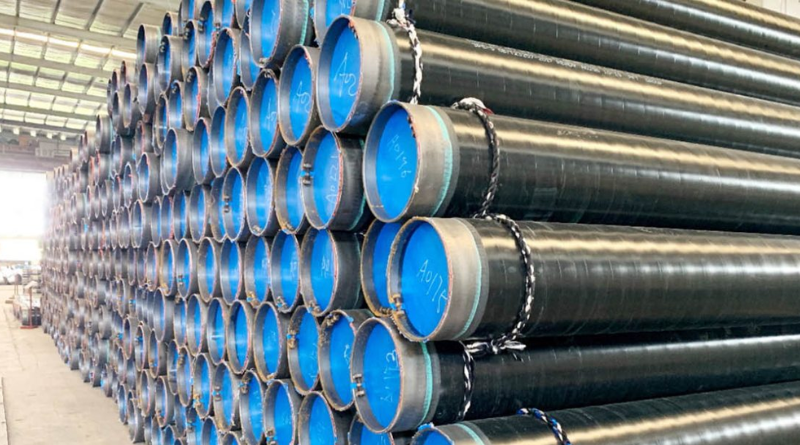
If you work with steel pipes in oil, gas, or water projects, you know coatings matter a lot. They protect pipes from rust and damage. Three common types are FBE, 3PE, and Polypropylene coated pipes. This article compares them in detail. We look at what each is, how they differ, and when to use them. By the end, you can pick the right one for your needs. For reliable suppliers, visit uniasen.com.
What is FBE Coated Pipe?
FBE stands for Fusion Bonded Epoxy. It is a single-layer coating made from epoxy powder. Workers heat the pipe and spray the powder on it. The heat melts the powder, and it bonds to the pipe surface.
This coating works well for both inside and outside of pipes. It stops rust by blocking water and chemicals. FBE handles temperatures up to 100 degrees Celsius. It is thin, about 300 to 500 microns thick. That makes it light and easy to apply.
People use FBE often because it is quick to put on. The process takes less time than multi-layer coatings. It also costs less to make. But it does not protect as well against scratches or impacts. If the pipe gets hit during transport, the coating might chip.
What is 3PE Coated Pipe?
3PE means Three-Layer Polyethylene. It has three parts. The first is an FBE base layer for rust protection. The second is an adhesive to stick everything together. The third is a polyethylene outer layer for strength.
This setup makes 3PE strong against outside damage. The total thickness is around 2 to 3 millimeters. It works in temperatures up to 80 degrees Celsius. 3PE is great for buried pipes because it fights soil stress and water well.
Applying 3PE takes more steps than FBE. Workers apply each layer one by one. This makes it more durable but also more expensive. It is common in oil and gas lines where pipes face harsh weather.
What is Polypropylene Coated Pipe?
Polypropylene coated pipe, often called 3LPP, is like 3PE but with polypropylene on the outside. It has three layers too: FBE base, adhesive, and polypropylene top.
The key difference is the outer material. Polypropylene handles higher heat, up to 140 degrees Celsius. It is thicker, about 2 to 4 millimeters. This gives better protection in hot areas or with hot fluids inside.
3LPP costs more than 3PE because polypropylene is pricier. But it lasts longer in tough spots. It resists chemicals and wear better. You see it in offshore pipes or high-heat projects.
Key Differences in Structure
FBE is simple with one layer. It bonds directly to the steel. This makes it thin and flexible. But it lacks extra shields.
3PE adds two more layers on top of FBE. The adhesive helps the polyethylene stick tight. Polyethylene is tough and blocks moisture.
3LPP swaps polyethylene for polypropylene. Polypropylene is harder and handles heat better. All three start with epoxy, but the extras change how they perform.
In short, FBE is basic. 3PE builds on it for everyday use. 3LPP takes it further for extreme cases.
Performance Comparison
Let’s compare how they hold up.
First, rust protection. All three do well. FBE blocks chemicals inside pipes. 3PE and 3LPP add outer barriers for buried lines.
For heat, FBE tops at 100°C. 3PE at 80°C. 3LPP wins at 140°C.
Mechanical strength: FBE is weak against hits. 3PE and 3LPP are stronger. They resist scratches during install.
In water or soil, 3PE and 3LPP shine. Their thick layers stop water entry. FBE needs extra care in wet spots.
Durability: FBE lasts 20-30 years. 3PE up to 50 years. 3LPP even longer in heat.
Standards: They meet codes like AWWA C213 for FBE, ISO 21809 for 3PE and 3LPP.
Overall, choose based on your environment. Cold and dry? FBE works. Hot and rough? Go 3LPP.
Cost and Availability
Cost varies by size and location. FBE is cheapest, around $5-10 per square meter. 3PE costs $10-20. 3LPP is $15-25 or more.
Why the difference? More layers mean more materials and time. But long-term, better coatings save on repairs.
Availability: FBE is everywhere. 3PE is common in oil areas. 3LPP is for special orders but growing in 2025.
Check local suppliers for prices. Bulk buys cut costs.
Best Uses for Each
FBE fits internal coatings in water pipes. It is good for gas lines too, where heat is not extreme.
3PE is top for external use in oil pipelines. It handles burial and transport well. Common in onshore projects.
3LPP suits offshore or hot fluid lines. Use it where temperatures rise, like in refineries.
For mixed needs, some pipes use FBE inside and 3PE outside.
Learn more about coated pipe options for your project.
How to Choose the Right One
Think about your project first. What temperature will the pipe face? High heat means 3LPP.
Next, environment. Buried in soil? Pick 3PE or 3LPP for strength.
Budget matters. If low cost is key, start with FBE.
Check rules. Some jobs need certain standards.
Talk to experts. Test samples if possible.
In 2025, new tech makes coatings better. But basics stay the same.
Final Thoughts
FBE, 3PE, and Polypropylene each have strengths. FBE is simple and cheap. 3PE adds protection for most jobs. Polypropylene handles heat best.
Pick based on needs to save time and money. Good coatings mean longer pipe life.