
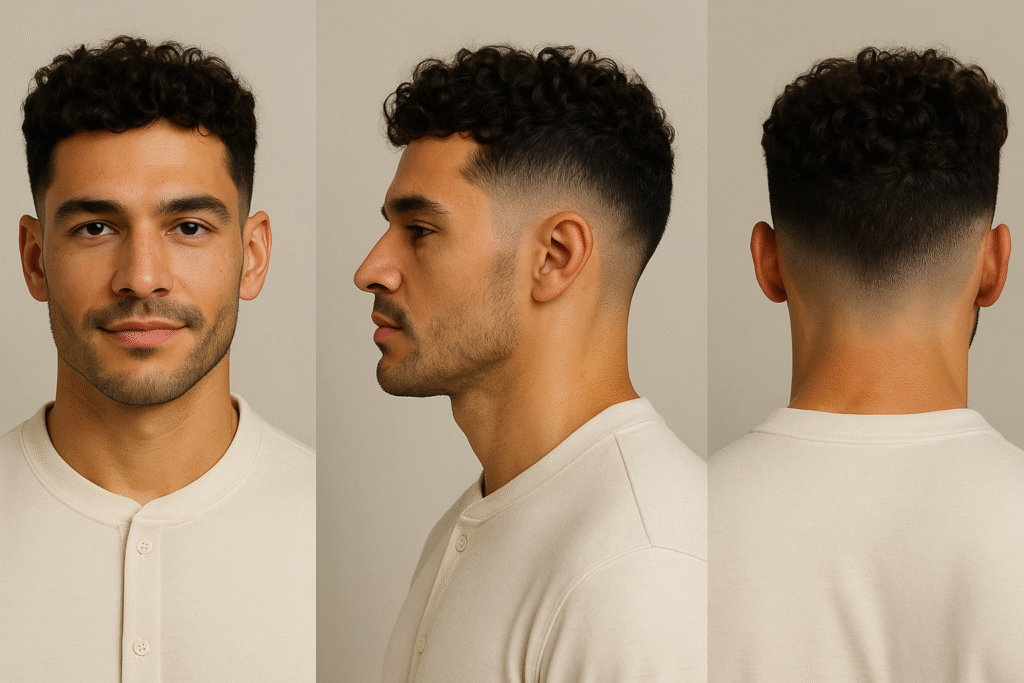
A fresh haircut can completely change the way you look and the way you feel. One of the most popular and modern haircut styles today is the Low Drop Fade. This haircut has become extremely common in barbershops because it works for almost everyone. It suits different ages, different hair types, different head shapes, and different personal styles. But even with how common it is, many people still don’t fully understand what a low drop fade actually is. Some confuse it with a mid fade, some mix it with a taper, and some think it is the same as a normal fade. This article explains everything you need to know about what a low drop fade really is, how it works, why it’s so popular, and what makes it different from other fade styles.
To truly know this haircut, you must understand the fade level, the drop curve, the blend, the top hair, the neckline, the sides, and how the barber creates the shape. By the end of this guide, you will know exactly what the style is, how it is done, and how to tell the difference between all fade types. This knowledge will also help you talk to your barber clearly and choose the perfect style for your face and hair.
Table of Contents
- What Is a Fade?
- What Is a Drop Fade?
- What Makes a Fade “Low”?
- The Exact Definition of a Low Drop Fade
- Key Features of a Low Drop Fade
- Parts of the Fade Explained
- Why the Low Drop Fade Is So Popular
- Who Should Get a Low Drop Fade?
- Low Drop Fade vs High Fade
- Low Drop Fade vs Mid Fade
- Low Drop Fade vs Taper
- How the Barber Cuts This Fade
- Common Variations of the Low Drop Fade
- Best Hair Types for This Haircut
- Face Shapes That Fit This Cut
- How to Choose the Right Lengths
- Styling Options
- Maintenance Guide
- Common Mistakes People Make
- Final Thoughts & Extra Design Ideas
1. What Is a Fade?
Before understanding the low drop fade, you must know the basics of a fade haircut.
A fade is a haircut where the hair gets shorter as it moves downward toward the ear and neckline. The blending makes the hair look smooth and soft. There are no hard lines, and the fade transitions from long to short in a clean pattern.
A basic fade includes:
- Long hair on top
• Medium hair in the middle
• Short hair near the ear
• Very short or skin at the bottom
The fade can be:
- High
• Mid
• Low
The height depends on where the shortest part begins.
2. What Is a Drop Fade?
A drop fade is a fade that curves downward behind the ear. Most fades follow a straight line around the head, but the drop fade “drops” lower at the back.
Key signs of a drop fade:
- Curves behind the ear
• Fade sits lower at the back
• Shape follows head structure
• Blend transitions more naturally
The drop fade looks softer and more natural because it follows the skull’s curve.
3. What Makes a Fade “Low”?
A low fade means the shortest hair begins low on the head, about one inch above the ear. It is the most subtle fade style, making it look clean without removing too much hair.
Signs of a low fade:
- Fade sits close to the ear
• More hair remains on the sides
• The blend is lower and gentler
• Top hair stands out more
4. The Exact Definition of a Low Drop Fade
A low drop fade combines the low fade and the drop fade into one haircut.
Exact definition:
It is a fade that starts low near the ear, then curves downward behind the head in a drop shape, and blends smoothly with the top hair.
If the fade starts low and drops down behind the ear, it is a low drop fade.
5. Key Features of a Low Drop Fade
Bold Features
- Starts low near the ear
• Drops behind the head
• Smooth and soft blend
• Works with all hair types
• Looks clean and modern
Unique Characteristics
- Curved fade line
• Natural-looking shape
• Fits many hairstyles
• Works on thick or thin hair
• Easy to style
6. Parts of the Fade Explained
A fade has several parts. Knowing them helps you understand the cut fully.
1. The Base (Skin or Short Hair)
The very bottom section. Can be skin, 0 guard, or 0.5 guard.
2. The Middle Blend
The middle area where the barber blends the fade.
3. The Drop Curve
The curved part behind the ear.
4. The Top Hair
The part you style: curls, waves, messy look, comb-over, etc.
5. The Hairline
The front edge. Can be lined up or natural.
6. The Neckline
The back edge: rounded, square, or natural.
7. Why the Low Drop Fade Is So Popular
So many people choose this haircut because it works for different styles and lifestyles.
Reasons for popularity:
- It looks clean
• It fits all ages
• It matches many hairstyles
• It blends smoothly
• It grows out nicely
• It’s easy to maintain
You can pair it with:
short curls
waves
straight top
messy top
braids
twists
textured looks
8. Who Should Get a Low Drop Fade?
A low drop fade works for many people.
Best for:
- Men and boys
• Students
• Professionals
• Athletes
• Curly hair
• Wavy hair
• Thick hair
• Straight hair
9. Low Drop Fade vs High Fade
| Feature | Low Drop Fade | High Fade |
| Fade Height | Low | High |
| Look | Soft & natural | Sharp & bold |
| Best For | All hair types | Straight & thick hair |
| Style | Modern & clean | Strong contrast |
10. Low Drop Fade vs Mid Fade
| Feature | Low Drop Fade | Mid Fade |
| Height | Lower | Middle |
| Blend | Softer | Stronger |
| Shape | Curved | Straight |
| Style | Subtle | Sporty |
11. Low Drop Fade vs Taper
A taper is not a fade.
A taper only cuts the sides and neckline lightly.
A fade cuts higher and blends more.
12. How the Barber Cuts a Low Drop Fade
Here is how the haircut is made.
Step-by-step process:
1. Set the baseline
Barber marks the low starting point.
2. Create the drop curve
The barber creates a curved line behind the ear.
3. Fade the bottom
Using guard 0 or skin.
4. Blend upward
Using guard 0.5, 1, 1.5, 2.
5. Shape the top
Trim or style depending on the request.
6. Line up the front
Sharp edges or natural hairline.
7. Clean the neckline
Rounded, square, or natural.
13. Common Variations of the Low Drop Fade
1. Low Drop Skin Fade
Sharpest look
Smooth blend
2. Low Drop Burst Fade
Circular fade around the ear
3. Low Drop Fade with Curls
Perfect for curly hair
4. Low Drop Fade with Waves
Clean and stylish
5. Low Drop Fade with Textured Top
Modern look
6. Low Drop Fade with Line Design
Artistic and bold
14. Best Hair Types for a Low Drop Fade
Straight Hair
Looks sharp
Lines stand out
Wavy Hair
Blends perfectly
Easy to shape
Curly Hair
Drop fade supports curls
Thick Hair
Easier to fade
More volume
15. Face Shapes That Match This Haircut
Oval Face
Fits perfectly
Square Face
Shows jawline
Round Face
Drop fade adds shape
Long Face
Balanced look
16. How to Choose the Right Lengths
Sides
Guard 0 → very short
Guard 0.5 → soft blend
Guard 1 → natural look
Guard 2 → fuller sides
Top
Short top
Medium top
Long top
Choose based on style.
17. Styling Options for the Low Drop Fade
Messy Top
Easy and natural
Curly Top
Defined curls
Wavy Brushed Back
Clean look
Comb Over
Professional style
Spiky Top
Classic and sharp
18. Maintenance Guide
Brush daily
Wash every 2–3 days
Moisturize
Trim edges weekly
Visitthe barber every 1–2 weeks
19. Common Mistakes People Make With This Haircut
Not saying the fade height
Not showing a photo
Cutting too high
Touching the blend at home
Using the wrong products
Not brushing daily
20. Conclusion
A low drop fade is a clean, modern, and stylish haircut that works for many face shapes and hair types. It starts low near the ear, drops behind the head, and blends smoothly into the top. Understanding the fade height, the drop curve, the blending steps, and the styling options helps you choose the perfect version for yourself. This haircut stays popular because it is flexible, fresh-looking, and easy to match with different styles. If you want more haircut inspiration, you can explore styles connected to the Low Fade Haircut, and if you want more design ideas, visit our site for more options that match your look.